National press, including the BBC, have in the past promoted reports advocating that office workers should sit in a ‘slouched back’ position. This is said to relieve pressure on the back.
Although these recommended slouched positions may unload the spine, most people have a tendency to slip down causing increased pressure on the posterior ligaments, resulting in back pain.
As Simone says, ‘The trouble is, this position will cause you to slouch eventually, stretching the posterior muscles of the lower back. It will almost certainly result in long term instability and support for your lumbar spine’
So what is the right way to sit? We advise tilting the base of your chair forward to put your pelvis in a good sitting position which makes the angle approximately 120 degrees. Do make sure that your screen and keyboard are aligned and directly in front of you. You should also get up and walk around every 30 minutes.
Posture related neck, headache and back pain are common symptoms that we see as osteopaths at Kane & Ross Clinics, particularly those patients who are sitting for many hours either at a PC, laptop or tablet.
Pain results from the muscles in the neck, shoulders and back getting over-tired as they’re not held in their most natural position. Waste products build up as the muscles are over stretched or shortened and an alteration to the blood flow in the muscle occurs leading to aches and pains.
These symptoms can be helped through osteopathic treatment, exercise and good ergonomic advice.
Even if the workplace provides the option for a work station assessment, it is essential that you sit in your chair in the most supportive way – otherwise neck and back pain symptoms are likely to persist.
Advice on how you can help prevent these posture related pain
– Sit in a supportive office chair with your knees bent at 90 degrees with both feet flat on the ground. Elbows should be bent at 90 degrees with the forearms supported by the desk height. Alter the chair height to accommodate these angles. If your feet do not then touch the floor then use a foot rest to support your lower limbs with the feet flat (avoid angled foot rests). Tilt the base of the chair forward so that your knees are below your hips.
– ensure you sit upright up against the back of the chair with a good lumbar support avoiding slumping the shoulders forward and tucking your chin in
– sit evenly on both buttocks do not cross your legs.
– ensure your computer screen is at eyebrow height, if you are using more than one screen use a plastic mat under your chair and that your main computer screen is directly in front of you. If you can use less screens, do.
– If you use a laptop, use an external keyboard and mouse and place your laptop screen at eye level on a screen stand.
– If you use a tablet users, take regular breaks every 30 minutes and avoid using when sitting in bed / sofa and stand on a table / desk.
– For all desk workers, we recommend taking regular breaks every 30 minutes.
– If you have headaches, neck pain or back pain, get a diagnosis , so that you can find out what the specific problem is and how to deal with it.
With Wimbledon now in full swing, tennis courts are the busiest they have been all year. Whether you play avidly all year round or dust off your racket only for the summer months, all tennis players have similarities and susceptibility to injury.
It is not just the direct strain that the body goes through when serving, spinning, smashing and sledgehammering the ball that causes musculoskeletal pathology. There are many factors that are often overlooked that may predispose injury and contribute to the manifestation of pain. Osteopathic management offers a full assessment of your biomechanics to find the underlying cause for pain that you are experiencing. Using a range of manual techniques such as soft tissue and articulation we treat acute injuries and acute and chronic pain. We also offer advice on self management and how to prevent recurrent injury.
In tennis and other racket sports our joints and the soft tissues surrounding them are particularly prone to overuse injuries due to the repetitive motions required when playing. Tennis players are also prone to traumatic injury due to the fast pace of a game, changing direction quickly and stopping and starting.
As osteopaths we commonly see traumatic injuries to the lower limb and repetitive strain injuries to the upper limb associated with racket sports. In the lower limb ankle strains and sprains and knee injuries are among the most prevalent. In the upper limb overuse injuries are seen in the wrist, elbow and in the shoulder. The most notorious repetitive strain injury is ‘tennis elbow’ or Lateral epicondylitis as it is more formally known, with the overall incidence of this injury in tennis players reported to be between 35 – 51%. Other common injuries associated with tennis are carpal tunnel syndrome, rotator cuff tendonitis, achilles tendonitis and back pain.
If anything is holding you back this season, please don’t hesitate to contact us. Find more information on how we can help you at www.kaneandross.co.uk.
What is “tennis elbow”?
In the forearm there are many small muscles. Most of these attach to the bony prominences of the elbow (the epicondyles), these are at the end of the humerus also known as the funny bone! These small muscles act to flex and extend the wrist as well as to stabilise it. Lateral epicondylitis is the inflammation of the tendons of these small extensor muscles causing pain at their attachment point on the lateral epicondyle of the elbow. Particularly the tendon of the extensor carpi radials brevis muscle. Pain is experienced due to both inflammation and periosteal irritation, where the surface of the bone is irritated.
Tennis Elbow can arise from the repetitive movement of the wrists causing weakening to the extensor muscles and subsequent damage and inflammation as described above. There is a high incidence of lateral epicondylitis in tennis players due to the repetitive movement and increased contraction of the extensor muscles when performing the backhand stroke.
As an osteopath we can diagnose each patient’s problem, relieve acute pain and help with chronic problems. We will teach you how to do specific exercises, focus your exercises to prevent pain and make you stronger. However… as I keep reminding my patients…you need to actually do your exercises. Sometimes we all need a little encouragement…
I loved the following article written by an athlete Pete Hitzeman. It gave me motivation that I should be more focused and work a little harder….on my own exercise! It is highly motivational and I hope it will give many of you the same sense of determination and uplift that I felt after reading it.
Give babies peanut butter to cut allergy by 77%, study says
By James Gallagher
Health and science correspondent
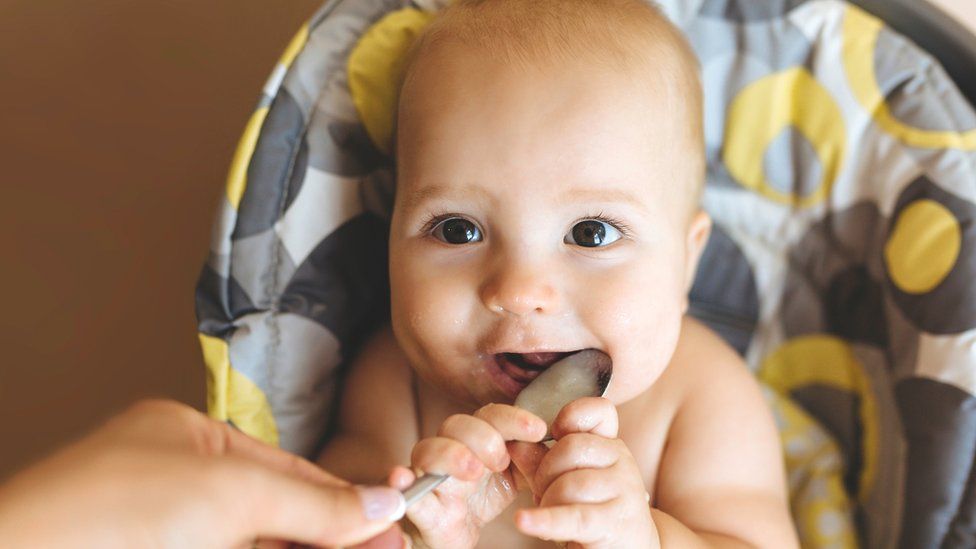
Giving young babies – between four and six months old – tiny tastes of smooth peanut butter could dramatically cut peanut allergies, say scientists.
Research shows there is a crucial opportunity during weaning to cut allergy cases by 77%.
They say the government’s advice on weaning – which says no solids until around six months – needs to change.
Experts warn whole or chopped nuts and peanuts are a choking risk and should not be given to children under five.
The current NHS guidance does say peanut (crushed, ground or butter) can be introduced from around six months old.
A baby is ready for their first solid food if:
they can stay in a sitting position, holding their head steady
co-ordinate their eyes, hands and mouth so they can look at their food, pick it up and put it in their mouth
swallow food, rather than spit it back out
Why do food allergies happen?
Peanut allergy has been rising in the UK with an estimated one-in-50 children now affected.
Food allergies are the result of our immune system mistaking something harmless for a severe threat.
For some, even a small amount of peanut can lead to such an overwhelming immune reaction that it becomes life-threatening.
Peanut allergy has become so common that some schools ban the ingredient.
There had been long-standing advice to avoid foods that can trigger allergies during early childhood. At one point, families were once told to avoid peanut until their child was three years old.
However, evidence over the last 15 years has turned that on its head.
Instead, eating peanut while the immune system is still developing – and learning to recognise friend from foe – can reduce allergic reactions, experts say.
It also means the body’s first experience of peanut is in the tummy where it is more likely to be recognised as food rather than on the skin, where it may be more likely to be treated as a threat.
Israel, where peanut snacks are common in early life, has much lower rates of allergy.
Other studies have suggested introducing other foods linked to allergies – such as egg, milk and wheat – early also reduced allergy.
The analysis was conducted by the University of Southampton, King’s College London and the research arm of the NHS – the National Institute for Health and Care Research.
They found the critical period to start was between four and six months, during which the allergy could be cut by 77%.
That is the equivalent of preventing 10,000 out of the roughly 13,000 cases of peanut allergy each year.
Delaying the introduction of peanut-based foods until the child was one-year-old would only cut allergy cases by 33%, according to the research.
For babies with eczema, which is a risk factor for allergy, the investigators recommend starting at four months – as long as the baby is ready.
They say parents should start by offering small amounts of fruit or vegetables.
Then when the baby is comfortable, around three heaped teaspoons of peanut butter a week should be introduced and maintained for years. Peanut butter, which can be quite dry, can be given with breastmilk.
Prof Graham Roberts, from the University of Southampton, said decades of advice to avoid peanut had “understandably led to parental fear” of giving children peanut and shifting rules led to large amounts of confusion from both within medicine and from parents.
However, he said this was a “simple, low-cost, safe intervention” that would “deliver vast benefits for future generations”.
I have really enjoyed the teaching sessions that I have started to run in Harley Street for newborn specialists. Discussions involved the most common conditions that babies present with in the clinic. The newborn specialists are familiar with these conditions and are in an ideal position to recognise symptoms early so preventing any long term complications. Osteopathy can often help these conditions but an integrated approach with specialists or parents will give optimum treatment for the babies. It was great to discuss and share experiences together. Thank you for all your positive feedback.
Continue with your exercise programme until advised to stop or modify your routine – the fitter you are the easier your pregnancy and delivery will be!
Exercise to strengthen the back and pelvis and to open the ribs.
Lift carefully by bending your knees and limit the amount of weight you carry.
Keep your pelvis above your knees when sitting.
Lie on your side when relaxing on the couch.
Put a pillow between your legs and under your bump when lying in bed.
Take walks after dinner and have small meals in the evening if you are suffering from heartburn.
Get someone to look at your ergonomics if you work in an office.
DON’T
Stand in one position for too long, stick your bump out or wear high heels.
Cross your legs when seated.
Lift and twist putting additional strain on your back.
Sit for more than 20 minutes at a time.
Slouch when sitting on the couch.
Get a massage if you are in pain. Specialist help will be much more beneficial.
Drink coffee, tea or eat red meat, oranges or tomatoes if suffering from heartburn.
New research has found that more than 80,000 Britons a year injure themselves incorrectly lifting or carrying youngsters. In response to this recent research BUPA has produced an illustrated guide showing parents how to lift young children safely to avoid pain. This can be downloaded via the following link: bupa.co.uk/parentalpains
As a family centred practice our osteopaths at Kane and Ross often see patients with back pain, knee pain and other joint pain caused by incorrectly lifting, carrying or changing babies, toddlers and young children. We also see many mothers experiencing back pain and neck pain from poor breast breastfeeding posture.
If you have any concerns or if you are experiencing musculoskeletal pain please don’t hesitate to contact the clinic on 020 7436 9007 or send an email to info@kaneandross.co.uk.
The Marylebone Journal is a local lifestyle magazine with articles that focus on the Marylebone community. Building community relationships is very important to Simone both around our practice in Courtfield Gardens and around Harley Street. Recently they interviewed Simone.


 l swing, tennis courts are the busiest they have been all year. Whether you play avidly all year round or dust off your racket only for the summer months, all tennis players have similarities and susceptibility to injury.